
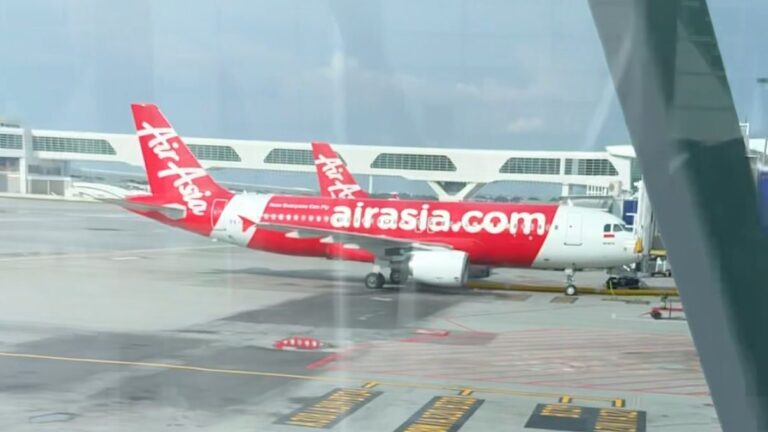
Disclaimer: Since I have only flown with two different airlines so far, the observations shared in this article may naturally include comparisons between my experiences with both carriers, even if unintentionally.
Flight Ticket Booking and Check-In Process
I booked my flight ticket about a week before my departure date and got an economy class ticket for IDR 1,856,334. My flight was scheduled for Friday afternoon, so I arrived at the airport around two hours before departure. The AirAsia check-in counter was still very quiet, which made the baggage check-in process quick and hassle-free.
However, one downside was that I couldn’t get a seat next to my friend on the same flight, which was a bit disappointing. On the bright side, the check-in staff were very friendly and helpful, especially since it was my first time flying.
Entering gate
Before entering the boarding gate, passengers were asked to line up based on the group indicated on their tickets. There were boarding groups such as Group 1, 2, and 3, so it’s important to check your assigned group and seat number in advance to avoid confusion.
After entering the boarding gate corridor, there was an additional step where cabin bags were weighed before being allowed onto the aircraft. This is often where delays or issues can happen. Generally, AirAsia allows a cabin baggage limit of up to 7 kg per passenger. However, some passengers still try to bring bags that exceed the allowed weight.
Honestly, this situation made me a bit anxious because several passengers were held back due to overweight luggage. My biggest concern was the possibility of passengers getting through despite exceeding the limit, which could affect the aircraft’s load balance and overall safety.
From this experience, I strongly recommend following the airline’s baggage rules. Complying with these regulations is not just about avoiding inconvenience, it’s also important for your own safety and the safety of everyone on board.
Inside the Airplane
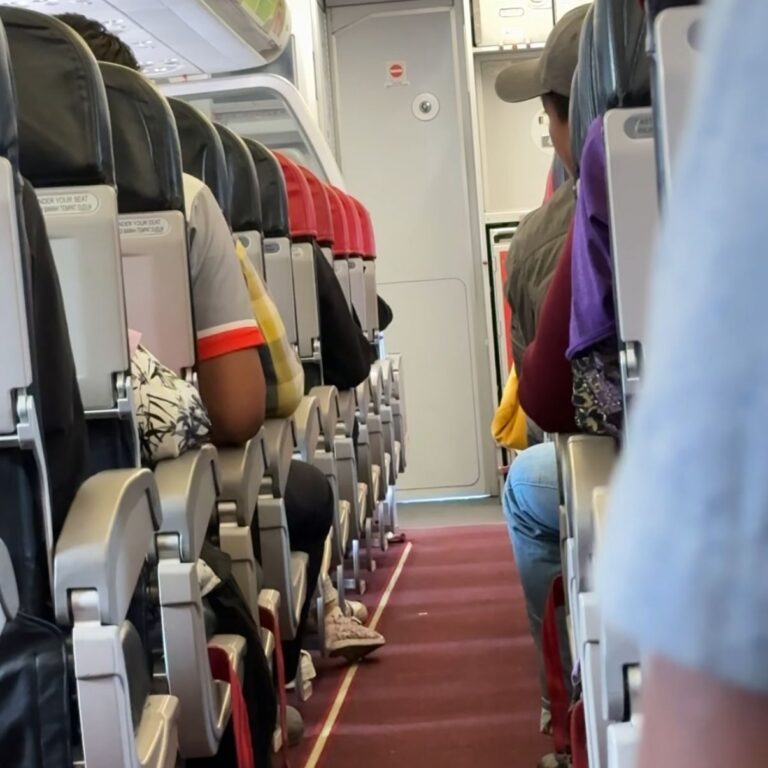
Once I finally boarded the plane, I started to feel a bit nervous—my legs were slightly shaky. I just tried to stay calm, pray, and trust the process. My first impression was positive: thankfully, the air conditioning was working well, so even though we had to wait a few minutes before departure, the cabin remained comfortable.
I was seated in an aisle seat, right next to the walkway where the cabin crew passed by while demonstrating the safety procedures in case of an emergency. The safety briefing was delivered clearly and professionally, although my view was slightly blocked by taller passengers sitting in front of me. Overall, the service was excellent—friendly, attentive, and professional.
After takeoff, I began to feel quite anxious. My body was trembling, my hands felt cold, and I couldn’t relax during the flight. The two-and-a-half-hour journey felt much longer—almost like six hours—because I was so tense the entire time. To make things more challenging, the plane encountered several episodes of turbulence.
Interestingly, when we took off from Juanda International Airport, the weather conditions were very good, which allowed the flight to depart on time. However, as we approached Malaysia, the aircraft experienced noticeable turbulence, adding to the intensity of my first flying experience.
Turbulance
If you’re wondering what turbulence feels like, I would describe it as riding a vehicle on a bumpy, uneven road. Your body naturally moves along with the motion of the aircraft. While it can feel uncomfortable, there’s no need to panic. Pilots and cabin crew are well-trained to handle these situations and will usually provide clear instructions and announcements before and during turbulence.
So, what did I do during turbulence? I focused on staying calm by silently praying and keeping myself mentally grounded. In moments like these, we don’t always know what might happen, so it’s natural to feel anxious. The best thing you can do is stay prepared, remain calm, and hope for the best outcome.
Another important tip: it’s not recommended to use the restroom during turbulence, especially if it happens frequently. It’s better to use the bathroom before boarding or shortly after takeoff while conditions are still stable. Based on my personal experience, being in the restroom during turbulence can feel very uncomfortable and unsettling, as you’re trying to maintain balance while also managing the situation. If you really need to go, it’s safer to remain seated to help keep your balance.
Airplane Crew Service: In-Flight Experience & Review
Appearance-wise, flight attendants are always expected to be neat and professional, and this airline is no exception. With their stylish black and red uniforms, the crew looked sharp and approachable. What stood out most to me was how they managed to be both friendly and firm while guiding passengers who had just boarded and hadn’t yet found their assigned seats.
Their foreign language skills were also impressive, allowing them to communicate effectively with passengers from other countries. On top of that, the crew was highly disciplined and efficient when handling in-flight meal purchases—quick, attentive, and still friendly. Overall, their professionalism and warm service made the flight experience much more comfortable and reassuring.
Landing
I don’t have much to comment on regarding the landing itself because I believe all pilots are well-trained to ensure a safe descent. The only factor that matters is whether the weather conditions are favorable at the time of landing. I mention this because in my two flights, the landings were quite similar—smooth and professional. Unlike some airlines that make landings memorable with announcements or even fun rhymes, AirAsia keeps it simple, providing standard information and a polite “thank you” to passengers.
Overall, flying isn’t as frightening as it may seem. However, there are many factors beyond our control that can make you wonder whether it will be your first or last flight. That’s why I also emphasize the importance of spiritual preparation alongside practical planning for air travel.
In conclusion, AirAsia is a solid choice for travelers who want to save on costs but still expect good facilities and excellent service. The airline strikes a great balance between affordability and comfort, making it perfect for budget-conscious flyers who don’t want to compromise on quality.
So, when are you planning to try AirAsia for your next international flight?